I see architecture as a process of translation: history can become spatial sequence, music can become structure, and cultural patterns can take on new forms of public life.
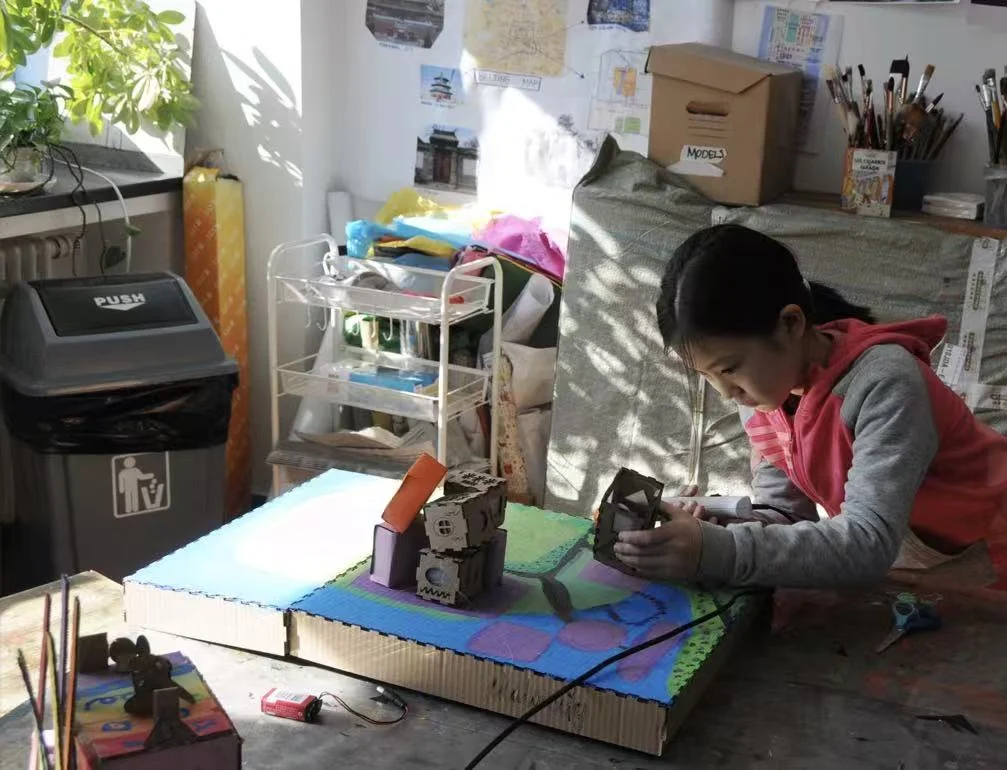
My projects often begin with close reading—of maps, archives, musical scores, or traditional motifs—and develop through drawing, modeling, fieldwork, and material experimentation. Across different scales, I ask how design can preserve what matters without freezing it in the past.
SIGNATURE PROJECT
Beijing Embassy District
An Ongoing Inquiry Into Architecture, Cultural Exchange, And Public Life
For more than three years, I have continuously explored Beijing’s Embassy District as a place where architecture records cultural encounters, political change, and evolving public needs.
My investigation began with archival and map research into 160 years of diplomatic and urban transformation. It later expanded into studies of architectural hybridity and a sustainable public-space proposal. Together, these projects examine the district not as a static historical artifact, but as a living urban environment that continues to negotiate between memory, identity, and public life.
2024 - 2025Researching MemorySchool Personal Project
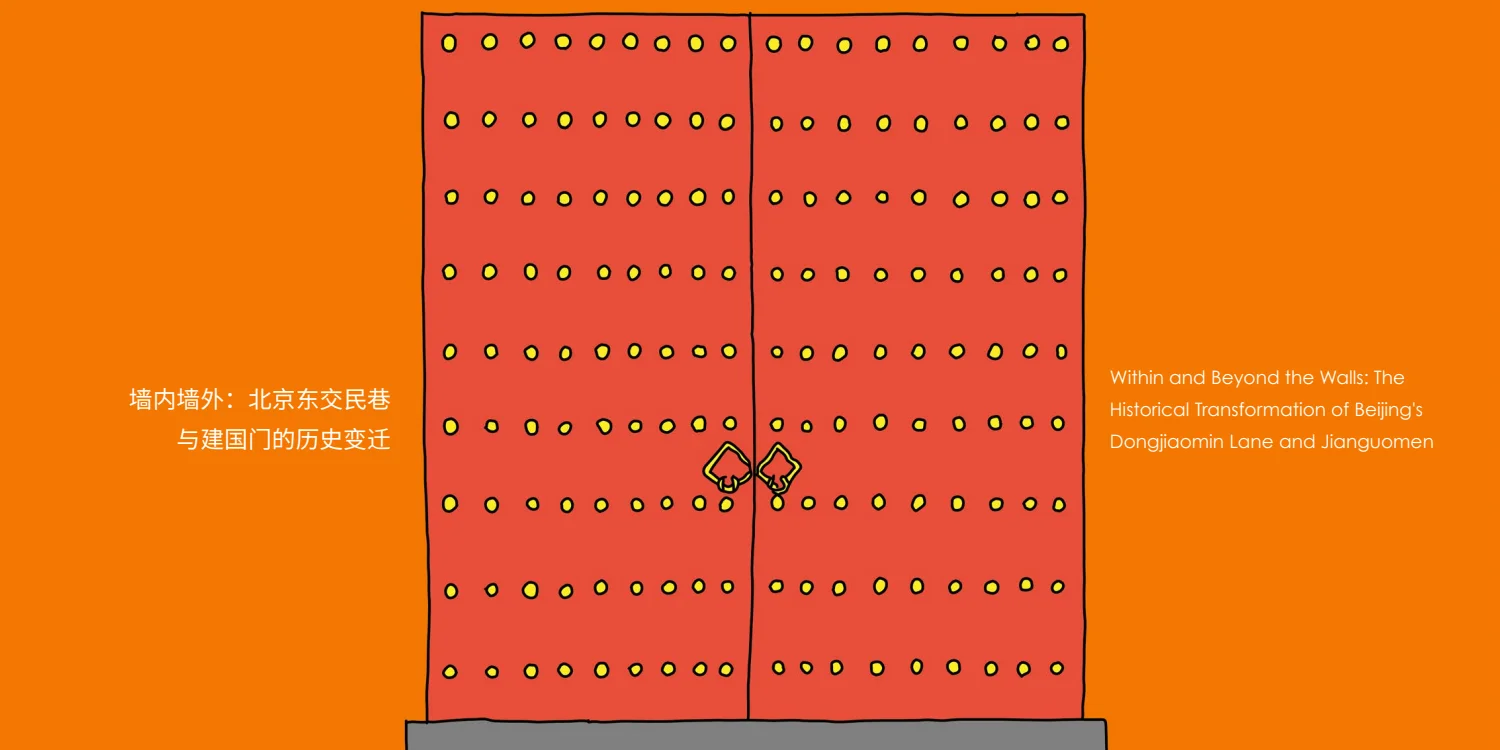
Within And Beyond The Walls: Beijing Embassy History
Tracing 160 Years Of Architectural And Diplomatic Change
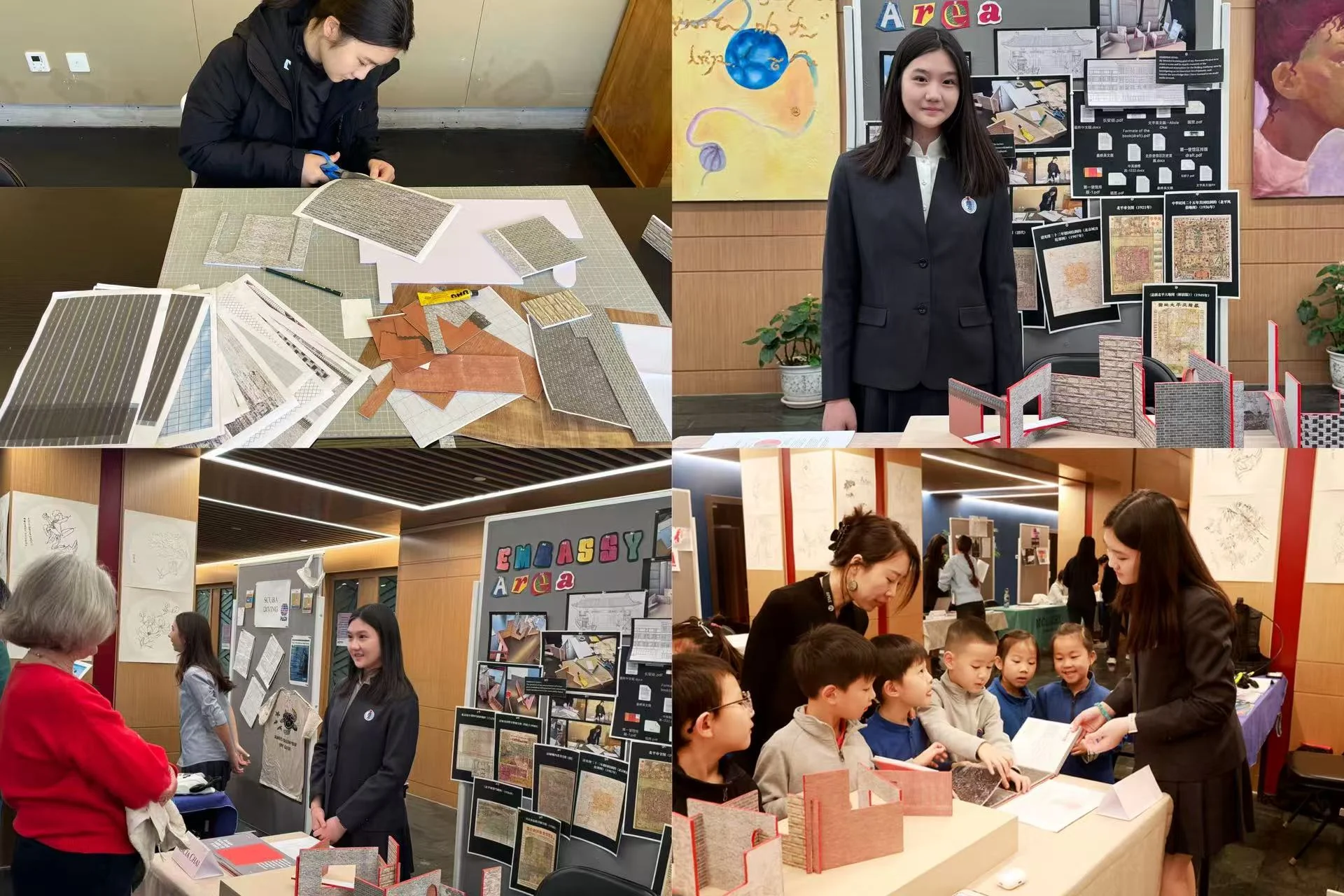
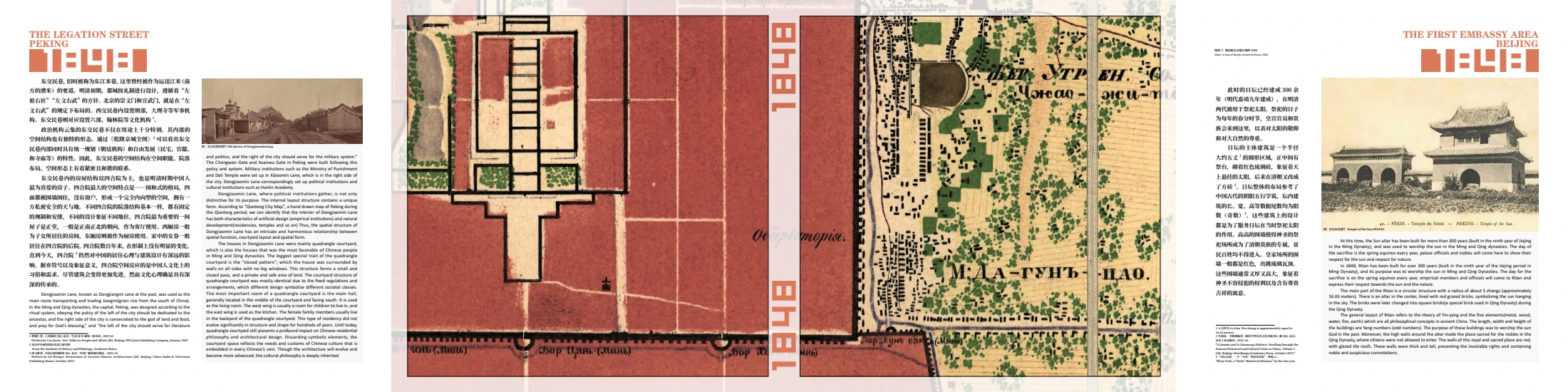
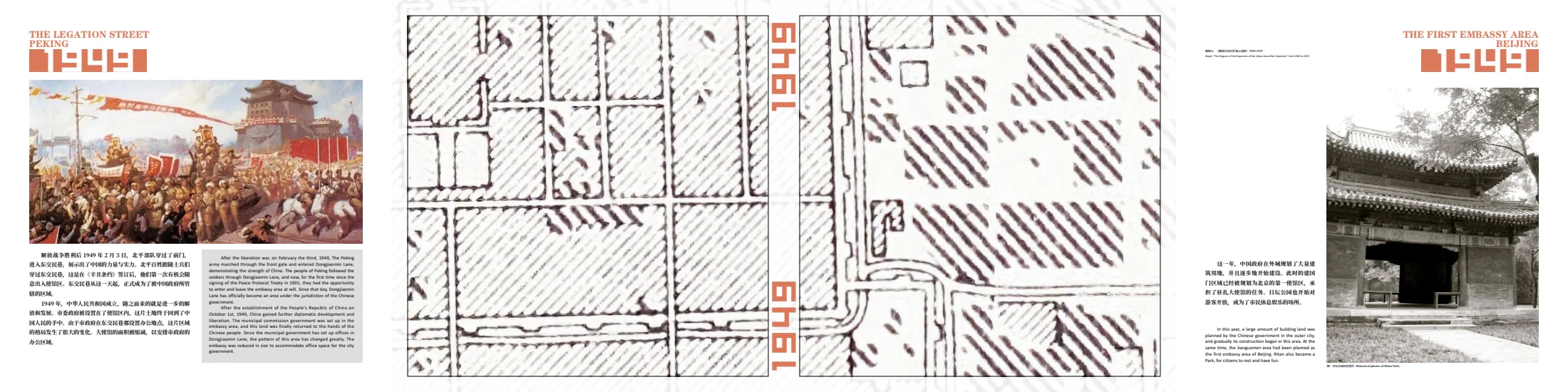
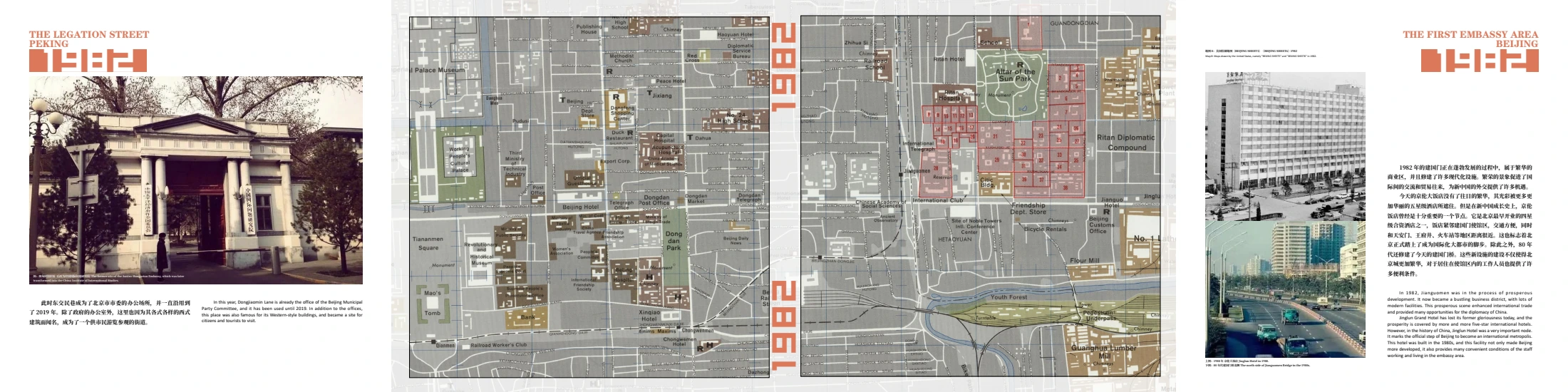
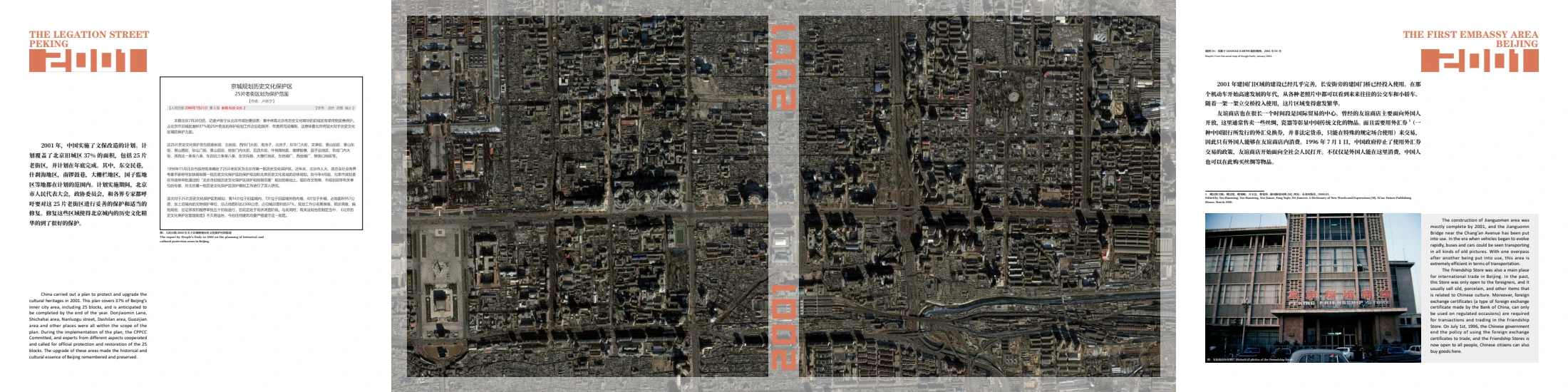
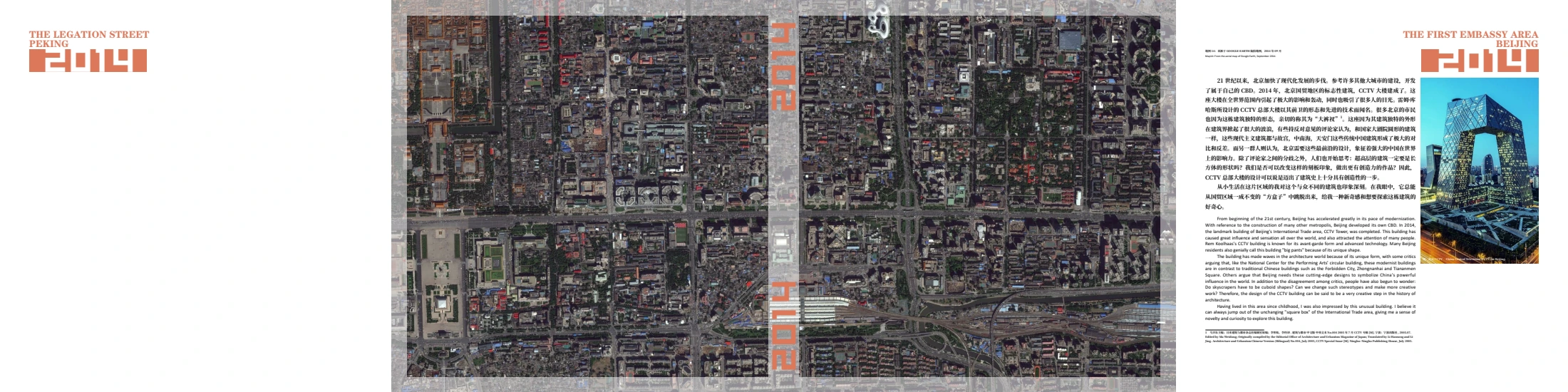
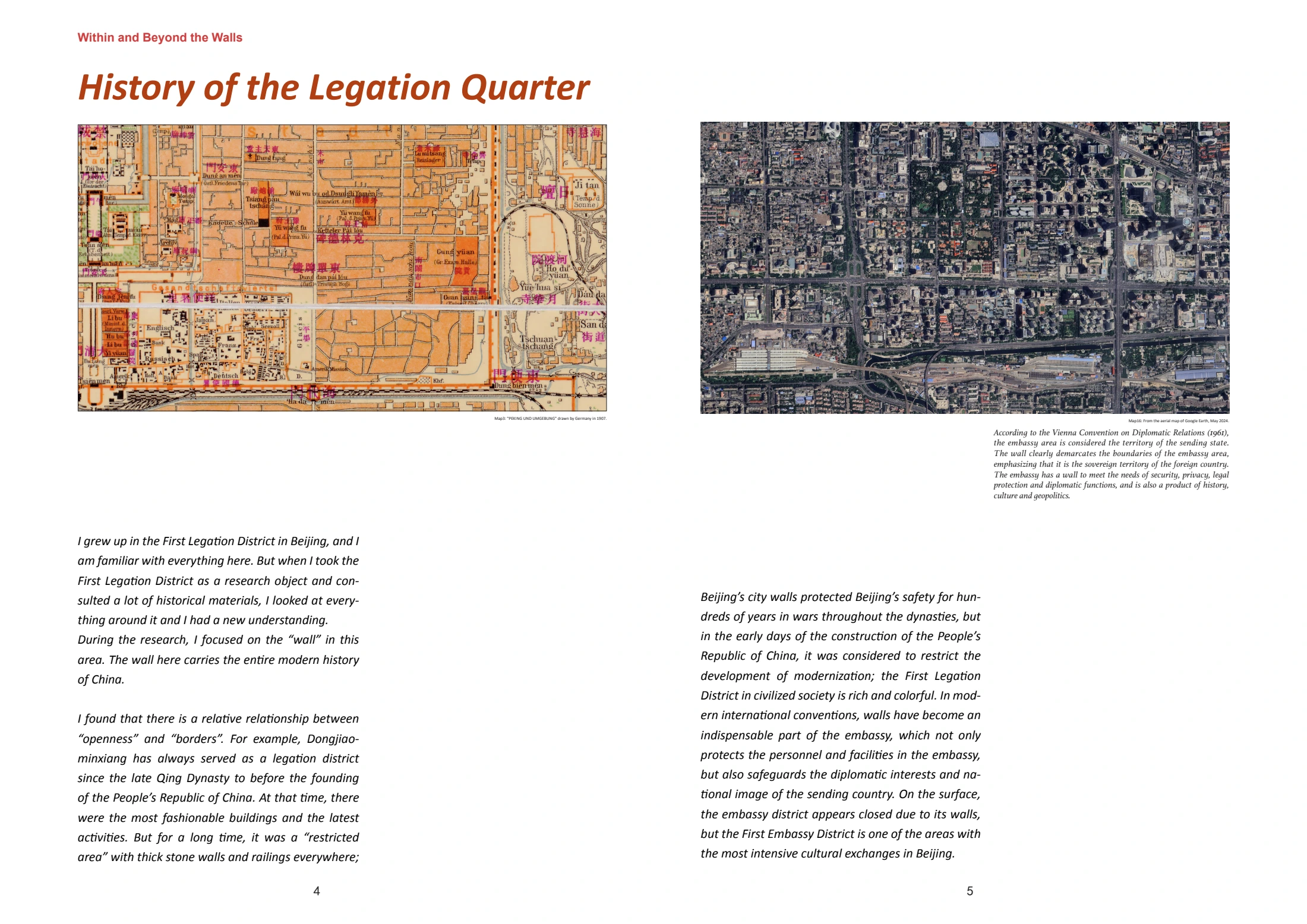
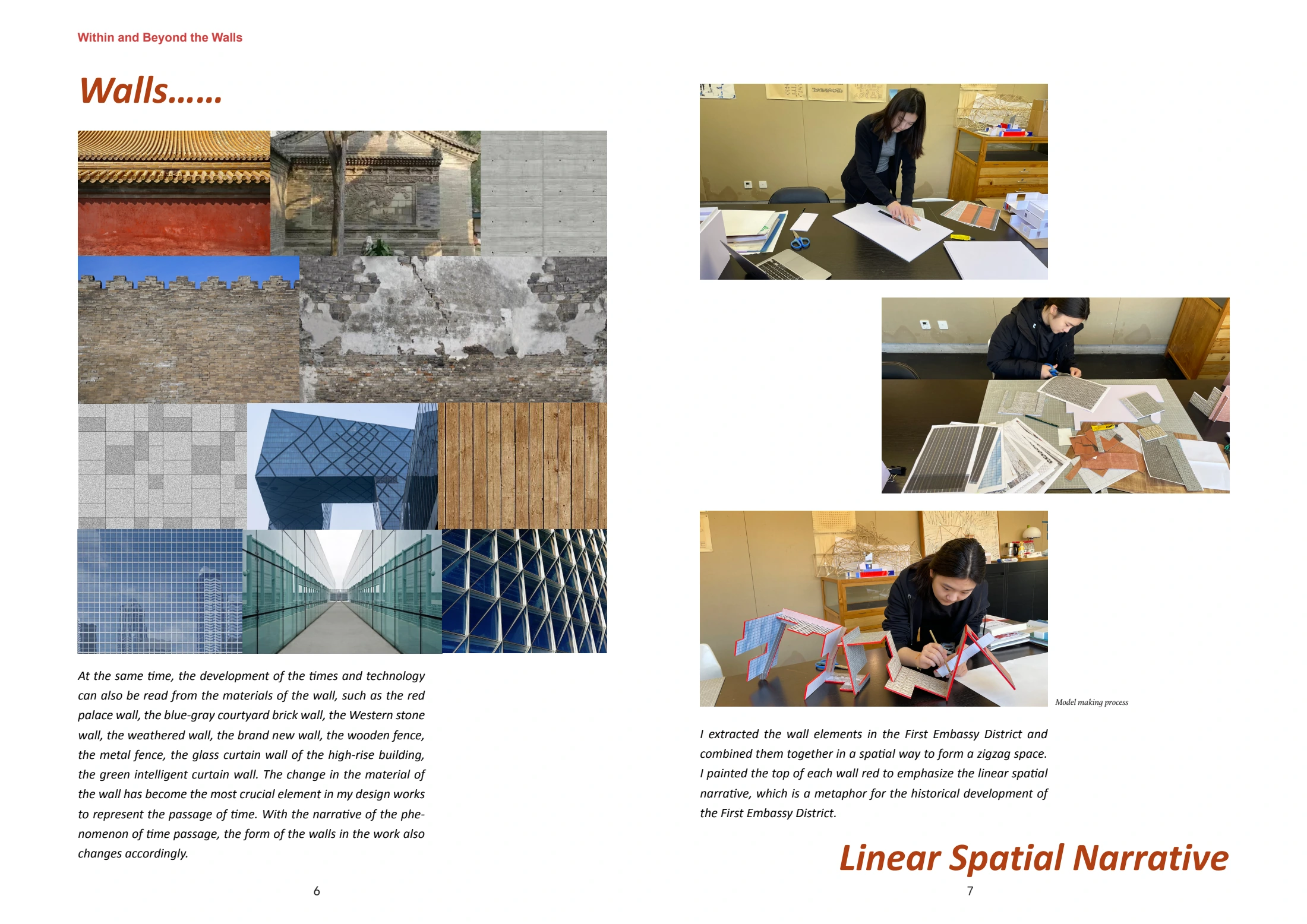
Through archives, historical maps, architectural scholarship, and illustration, I traced the transformation of Beijing’s Embassy Area from Dongjiaomin Street to Jianguomen.
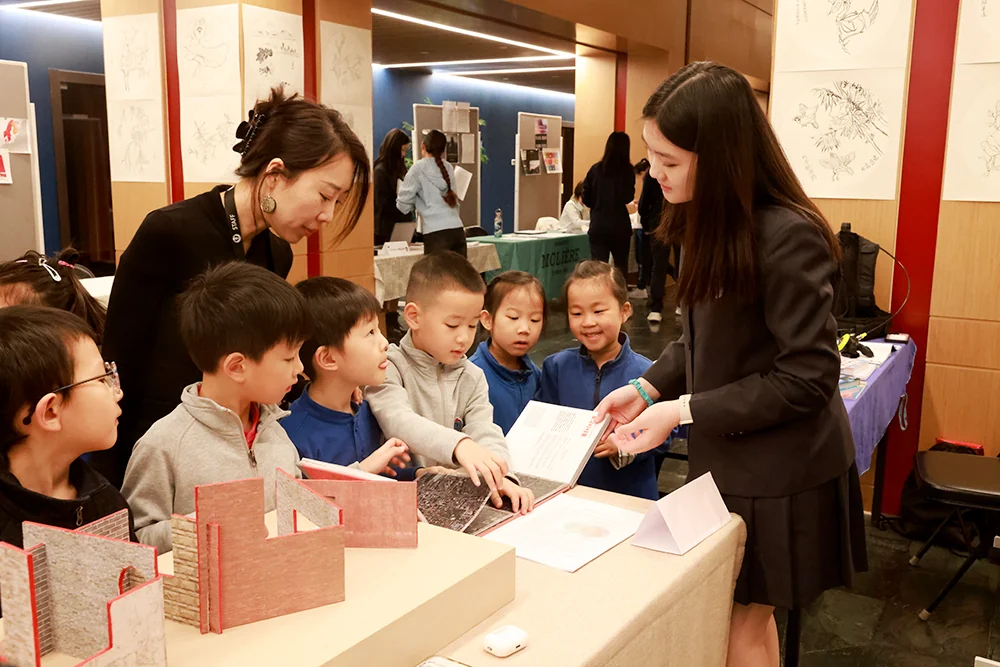
The research became a 23+ page illustrated book examining how diplomacy, conflict, cultural exchange, and urban development reshaped the district over 160 years. Following a six-month editorial review, the book was formally published under ISBN 978-7-7800-3967-3 and donated to Keystone Academy’s library, making the research available to a community of 1,670+ readers.
2025 SpringReimagining Public LifePublic-Space Proposal
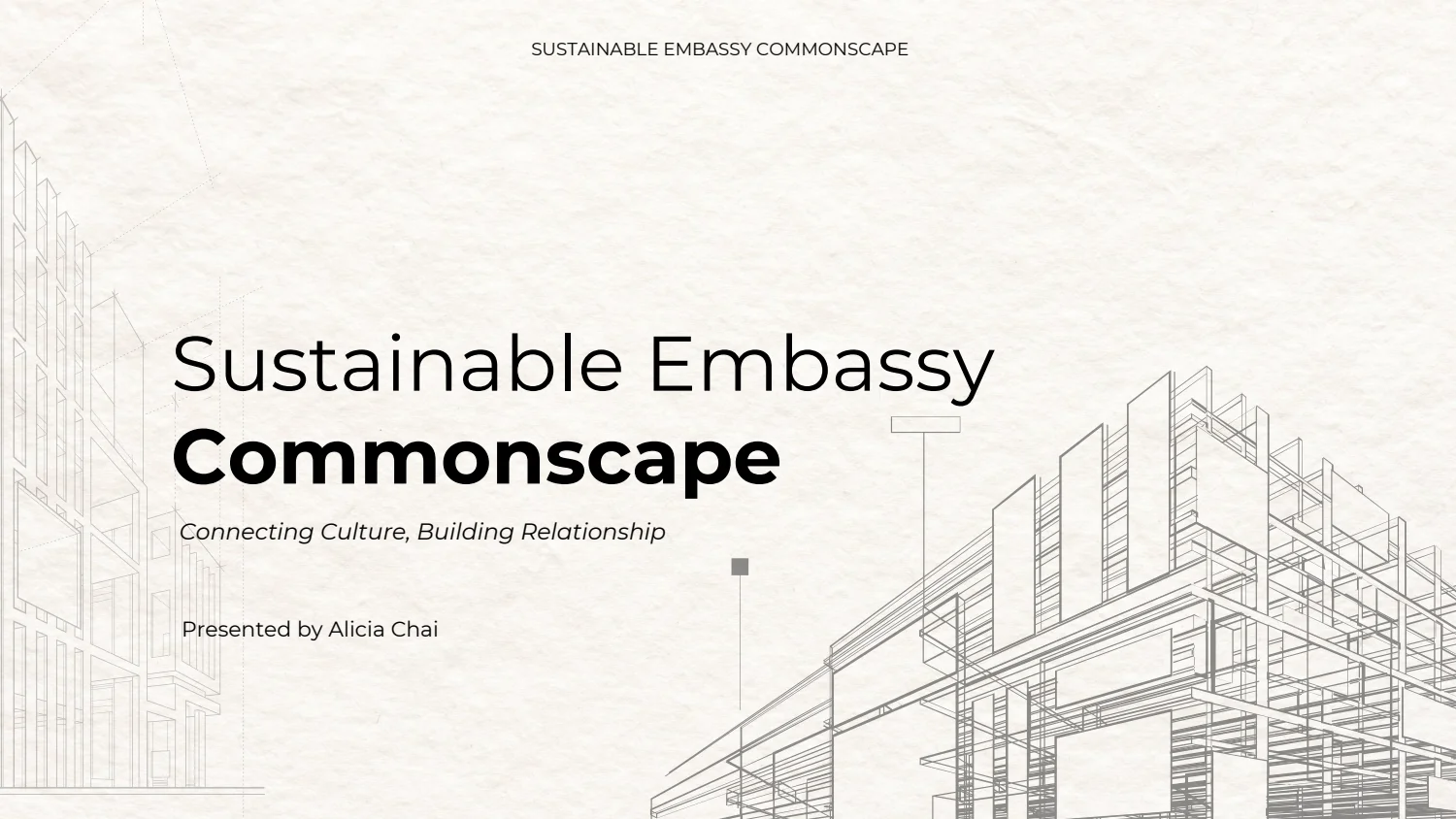
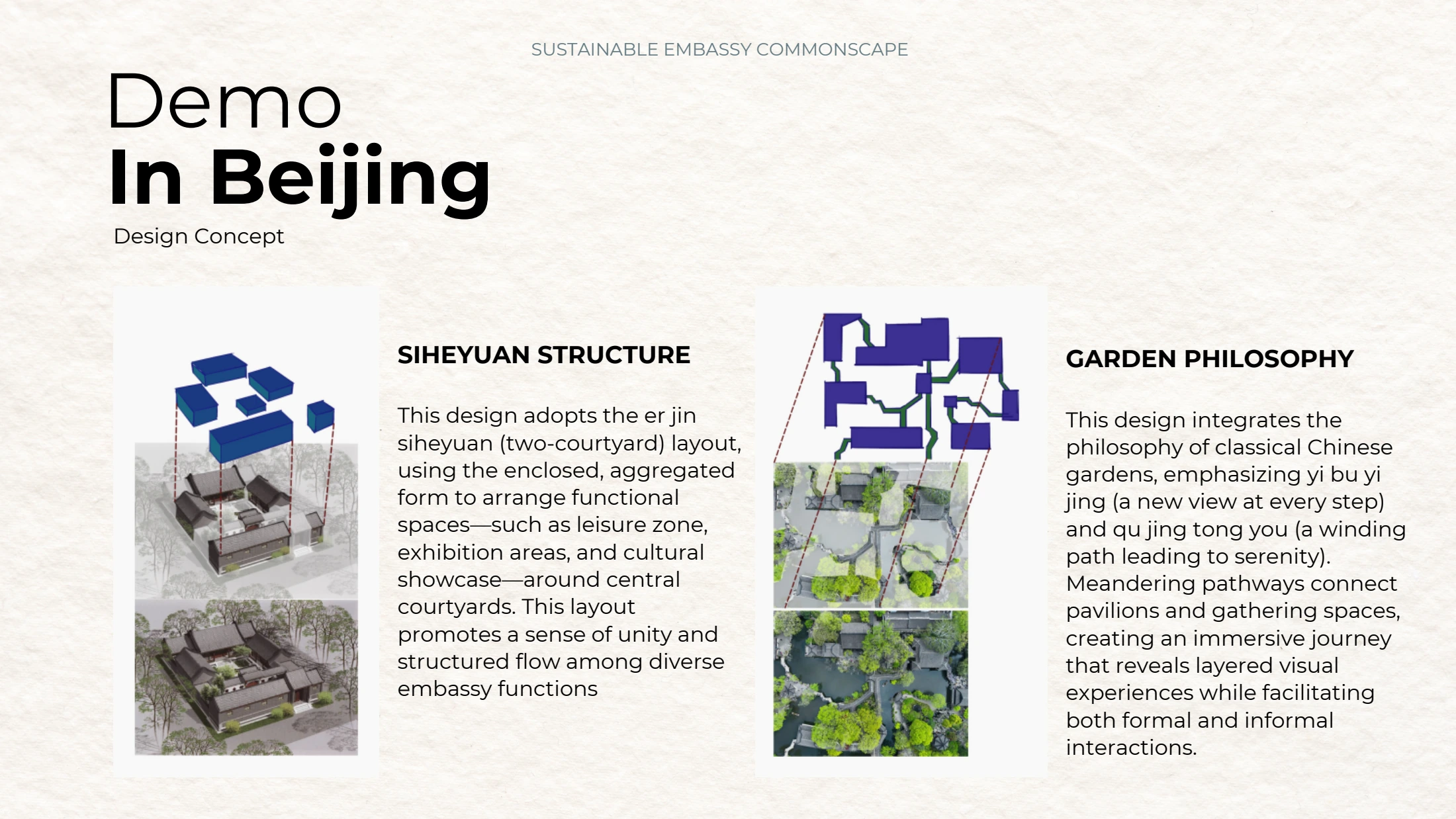
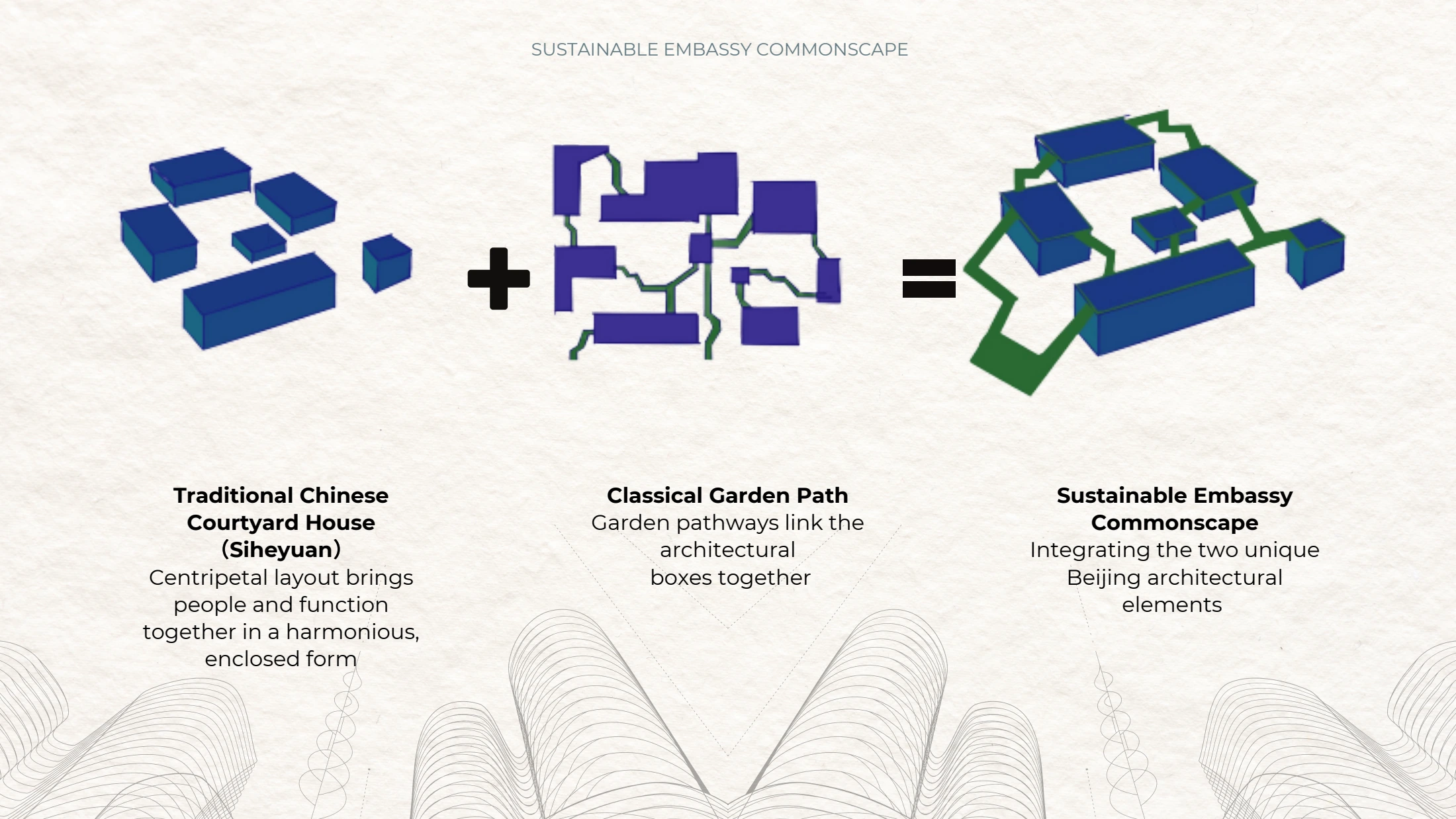
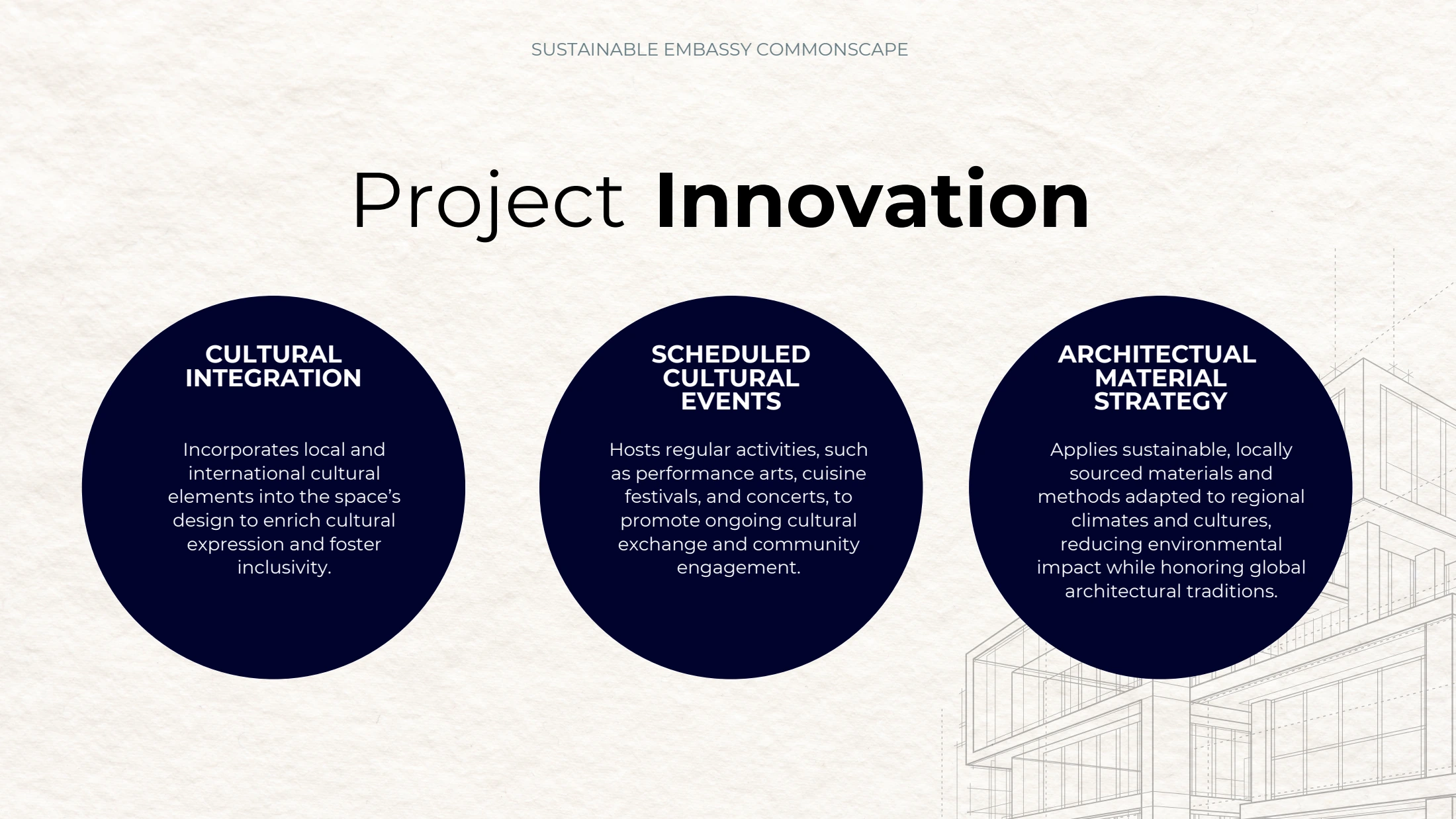
Sustainable Embassy Commonscape
Reimagining The District As A Public Commons
Moving from historical research to contemporary public life, I conducted field observations and surveys to identify three gaps in the district’s public environment.
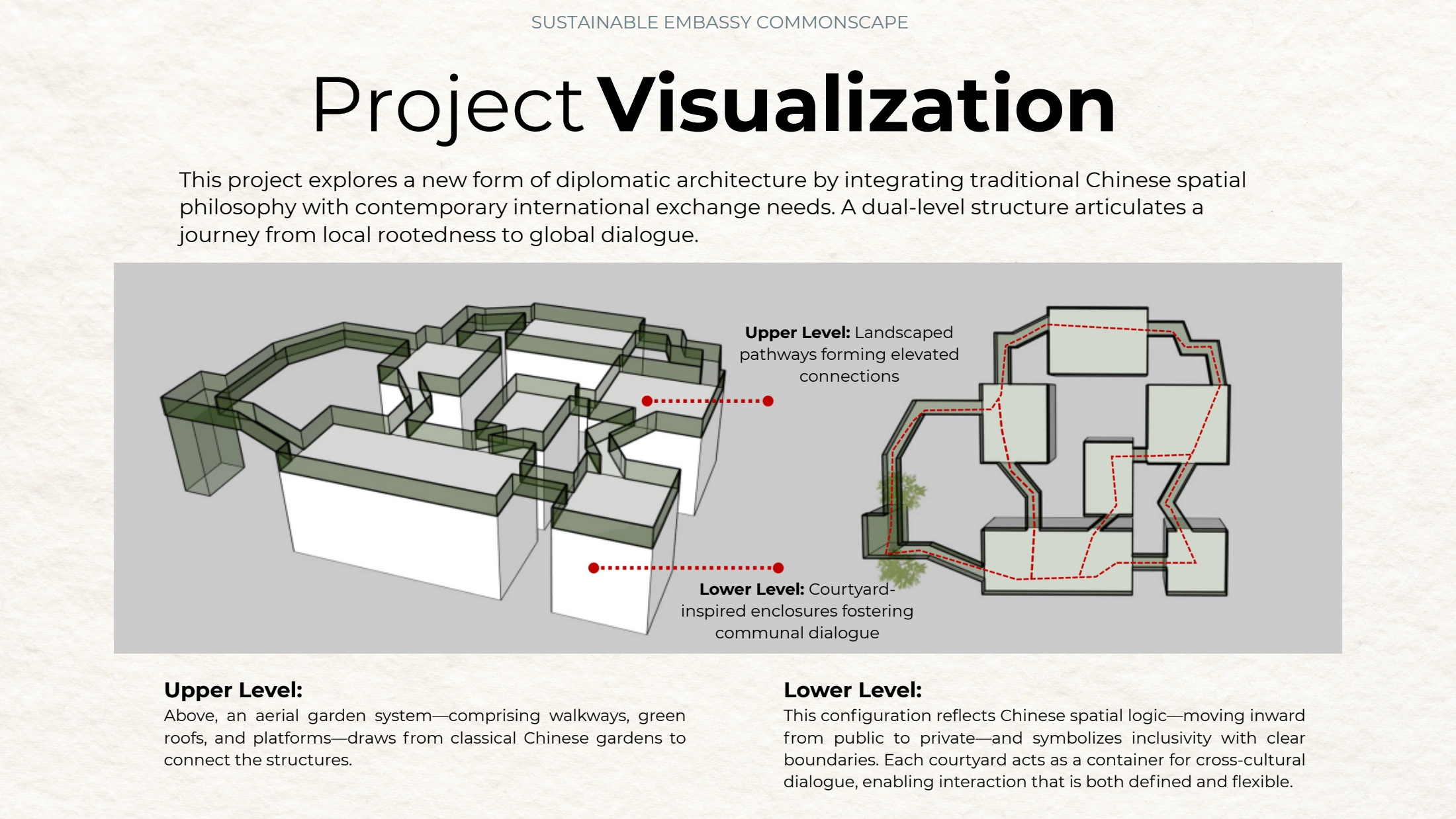
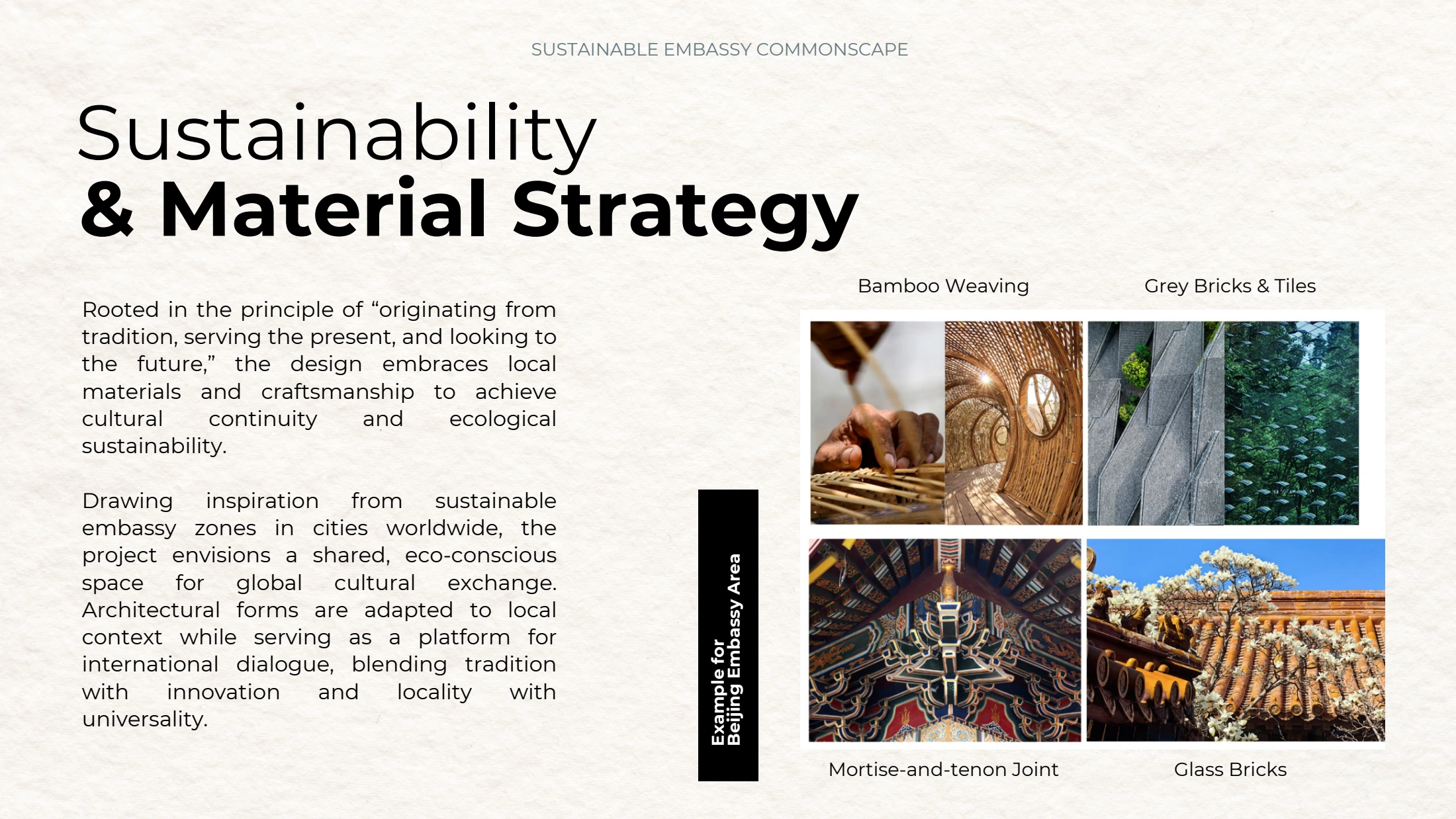
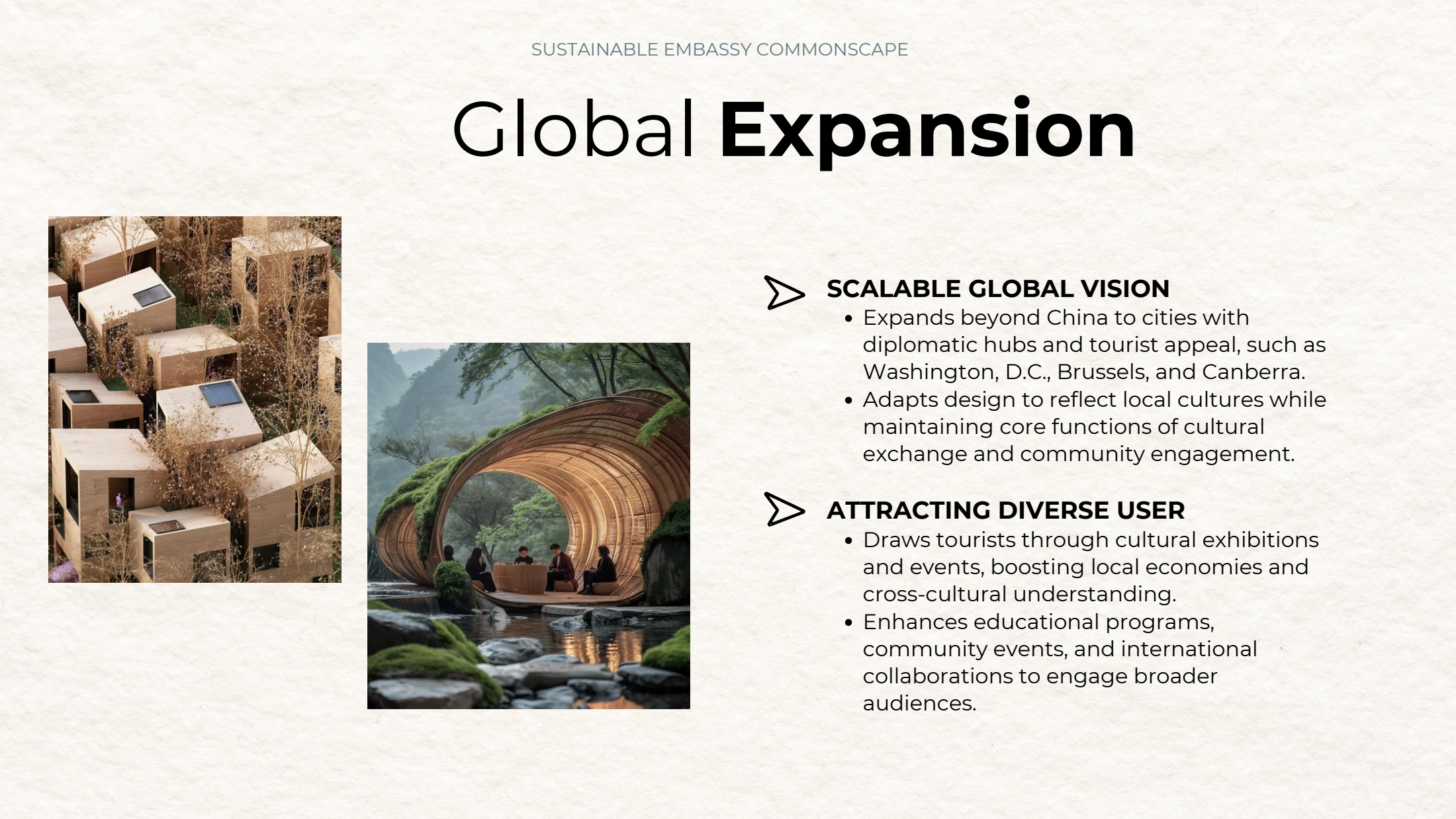
I responded with a two-tier, five-zone commons that integrates courtyard and garden traditions with reused billboard structures, local materials, solar energy, and digital management. The final 26-page illustrated proposal also considers how the framework could be adapted across six cities.
5 Functional ZonesTo support cultural exchange, inclusivity and sustainability
HIGHLIGHTS
PAGE 14PAGE 15PAGE 17PAGE 18PAGE 19PAGE 24
2026 SummerTranslating Into FormArchitectural Composition
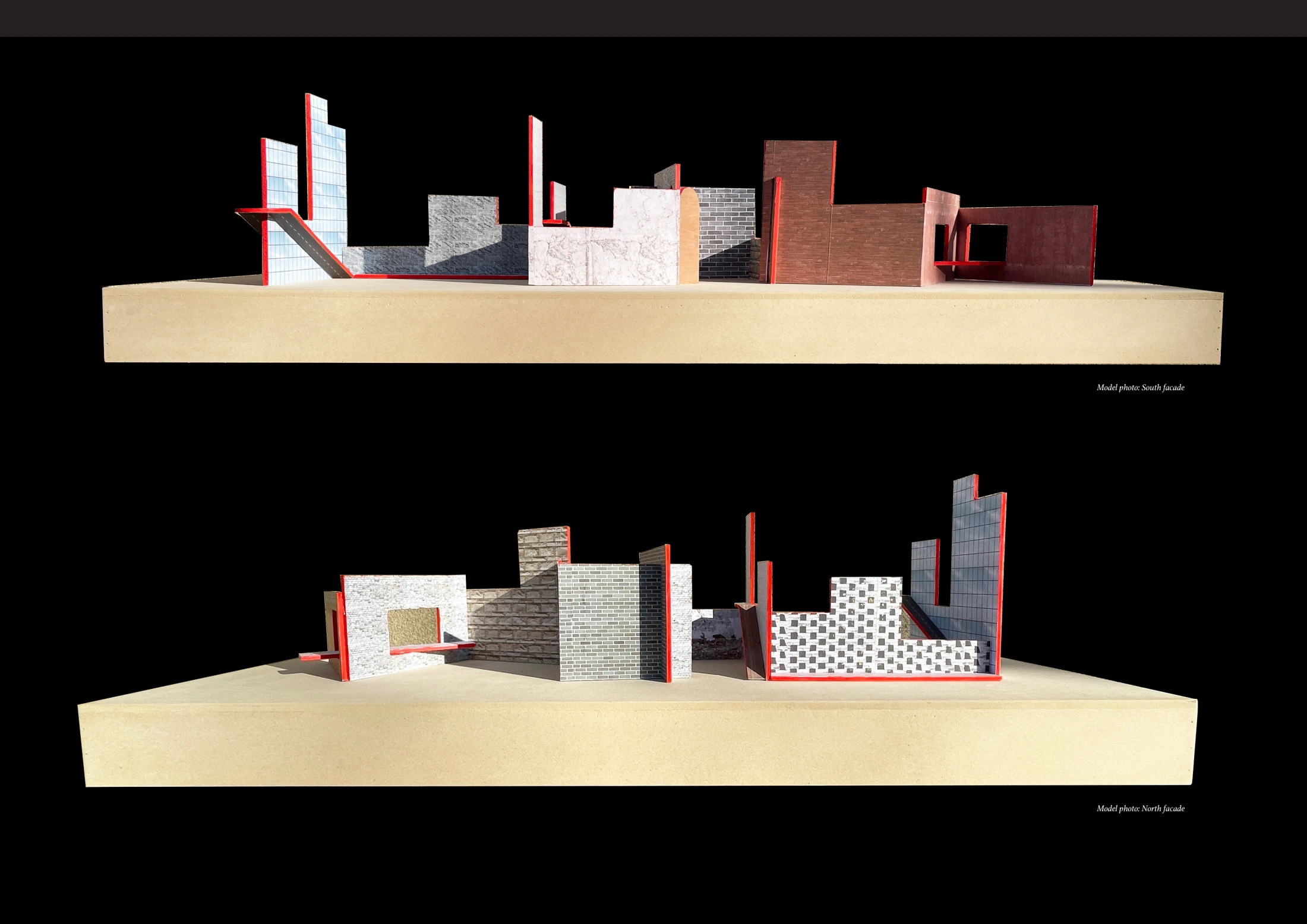
Reconstructing Cultural Hybridity
Architectural Composition Reflecting Personal Emotional Response To The Embassy Area
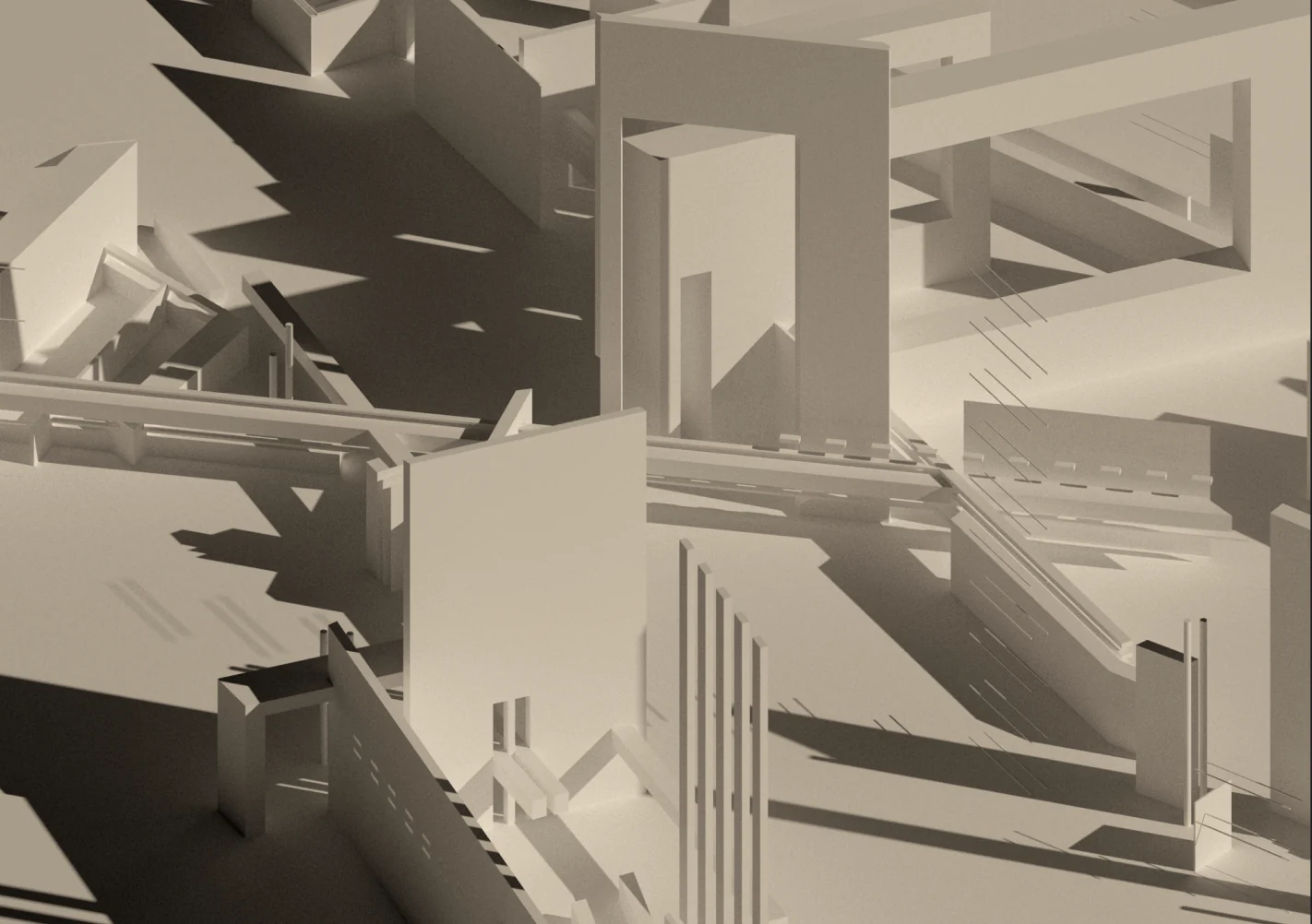
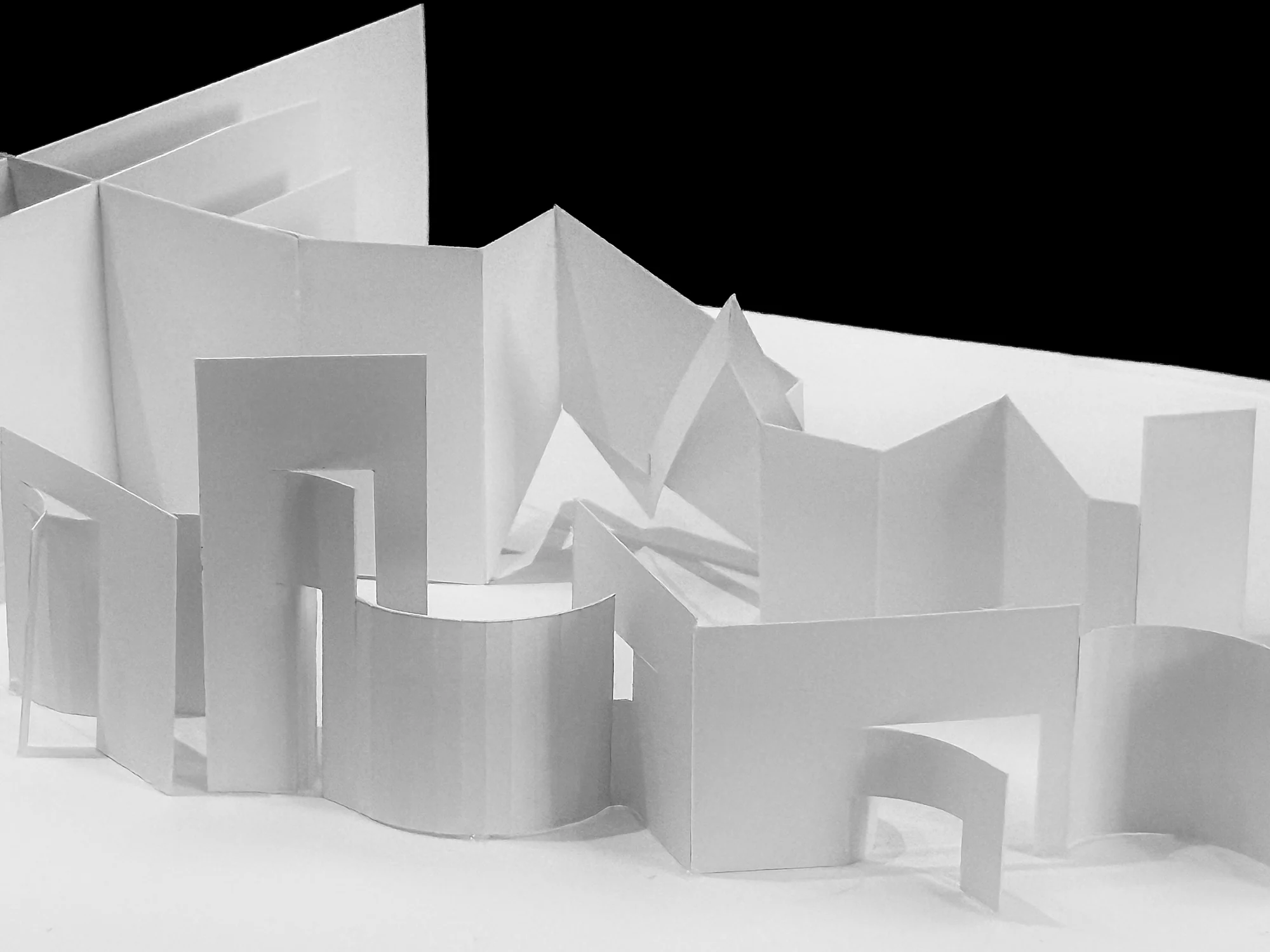
Rather than reproducing one historical style, I developed a new architectural composition that expresses the district as a layered, cross-cultural urban environment.
I approach architecture as a translation between memory, music and public life. Through models, drawings and material experiments, I explore how rhythm becomes structure, how cultural patterns become spatial relationships, and how a place can preserve its history while opening itself to change. These works trace that inquiry across installations, pavilions and architectural compositions.